
From 31 October no Brentwood councillor or parish council can send a planning application to committee. Five did this year. Council votes on the rules tonight.
Brentwood councillors lose the power to send a planning application to the Planning Committee. From 31 October a ward councillor’s referral, a parish council’s objection and the number of letters a scheme attracts will all count for nothing in deciding who makes the decision. Full Council is asked to write that into the constitution at its meeting tonight, Wednesday 23 September, at 7pm in the Council Chamber at the Town Hall on Ingrave Road.
The change is national, not local. The Town and Country Planning (Discharge of Local Planning Authority Functions) (England) Regulations 2026 were made on 15 July and come into force on 31 October. Every English council has to fall into line. Brentwood’s Monitoring Officer, Claire Mayhew, put the report to Council on 8 September and says failing to adopt the changes would leave the council’s planning decisions open to judicial review (item 9, Council, 23 September 2026).
What that looks like in practice is easier to see in the borough’s own recent decisions than in the legislation.
Five applications this year that got to committee by a route that is closing
Brentwood’s Planning Committee has met six times in 2026. The council’s own minutes name the reason each application reached it. Five got there because somebody asked.
- 25/01085/FUL, land next to 77 Mount Avenue, Hutton, 13 January. Referred by Cllr Jason Gibson, who wrote that inspectors had refused the plot repeatedly over twenty years. Officers recommended approval. A motion to refuse was lost 3 votes to 7, and the committee then approved it 7 to 4.
- 25/01187/HHA, 15 Coleridge Walk, Hutton, 13 January. Referred by Cllr Adam Chinnery, the Hutton East member, over the “overbearing nature of the development”. Approved 7 to 2, with 2 abstentions.
- 25/00686/HHA, Bernkastel, 78 Peartree Lane, Doddinghurst, 10 February. Referred by Doddinghurst Parish Council on the grounds in its objection. Approved 11 to 2.
- 26/00137/FUL, land north west of Central House, Eagle Way, Great Warley, 30 June. Referred by Cllr Jay Laplain, the Warley member, who wanted councillors to weigh electric vehicle chargers against the loss of greenspace. Refused 7 to 3.
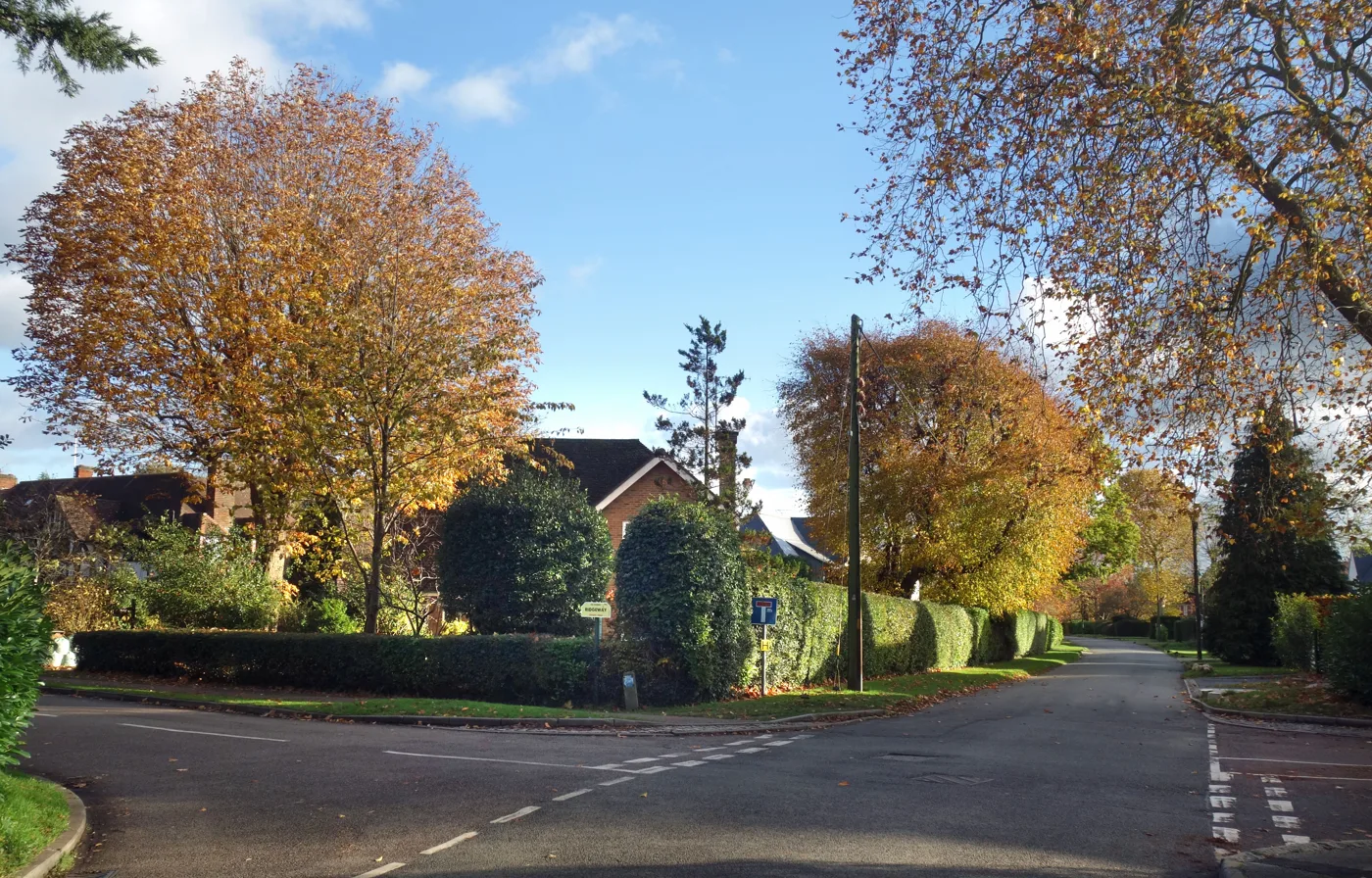
- 25/01435/FUL, roads on Hutton Mount including Heron Way, Ridgeway and Spurgate, 30 June. Referred by Cllr Russell Quirk, the Hutton South member, over speeding, cost to residents and consultation. Approved unanimously.
Two of those five were householder applications, carrying the HHA reference. Under the new Schedule 1 those must be decided by an officer in every case. The report puts it plainly: the regulations “remove entirely the ability of Members to determine such applications, regardless of local sensitivity or political interest”.
What replaces it
Bigger applications sit in Schedule 2, and they too are presumed to be officer decisions. One can only be referred to committee if two people agree that it raises an issue of economic, social or environmental significance to the area, or a significant planning matter.
Those two people are the nominated officer and the nominated member. The report asks Council to name the Director of Place as the officer and the Chair of the Planning Committee as the member, with the Vice-Chair standing in when the Chair cannot act. Cllr Philip Mynott chairs the committee at present and Cllr Martin Cuthbert is Vice-Chair.
If the two disagree, officers decide. If the officer concludes at the outset that referral is not justified, the case never reaches the member at all.
The draft protocol attached to the report lists what will not get an application to committee on its own (Appendix B, Gateway Assessment Protocol):
- a set number of objections has been received
- a ward councillor has requested referral
- an amenity society has objected
- the application is controversial, or has attracted public interest
- the application affects a public house
- the application is said to be contrary to policy
Those things can still matter, but only as evidence that the statutory test is met. They no longer open the door by themselves.
Brentwood already delegates more than most
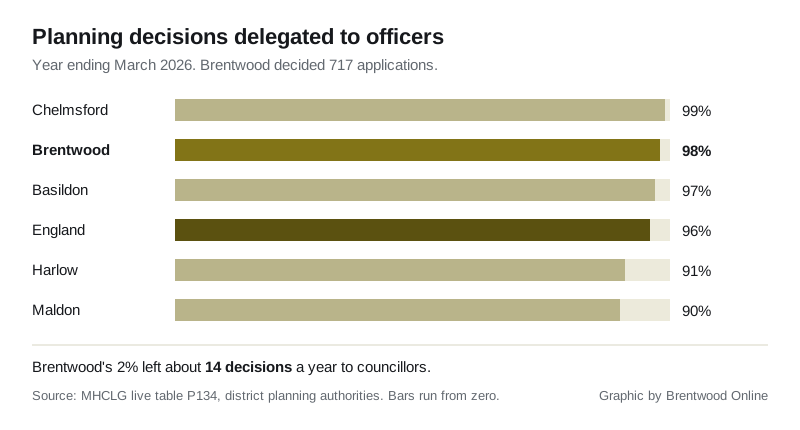
The committee route was never the normal one. In the year to March 2026 Brentwood decided 717 planning applications and delegated 98% of them to officers, against 96% across England and 96% across the East of England. That leaves roughly fourteen decisions in the year taken by councillors.
Chelmsford delegated 99%, Colchester and Castle Point 98%. Harlow, at 91%, and Maldon, at 90%, used their committees most (MHCLG live table P134).
One part of the legislation does not bite here. Committees are capped at 13 members, and Brentwood’s Planning Committee has 11, with six named substitutes. No seats have to go.
What does not change
The right to speak at committee is untouched. When an application does reach the committee, objectors, applicants and ward councillors can address it as they do now. What has gone is the route to getting a hearing, not the microphone.
Applications made by the council itself, or in which the council, a councillor or an officer has an interest, keep a separate gateway. That is how the £25m Brentwood Centre redevelopment reached the committee on 15 September, and how the Willingale Close garages scheme reached it in June.
The council also has to publish what it is doing. The protocol requires a completed gateway form on every planning file and a regular report to the Planning Committee listing each assessment, the route taken and the reasons. That report is the thing to watch from November.
Two loose ends in the council’s own papers
Recommendation 5 asks Council to name the Director of Place as nominated officer. Paragraph 3.7 of the same report says the nominated officer “should be the Chief Planning Officer”. They are not obviously the same post, and the report does not reconcile them.
The draft protocol also refers throughout to a “Development Committee”. Brentwood does not have one. Its committee is the Planning Committee, which is the name used in the covering report and in the recommendations.
The report records that there has been no local consultation on any of this, and says none was needed: “There has not been any local public engagement and consultation on the matters set out in this report, which is not necessary, nor would be considered appropriate.” The government consulted nationally during 2025 and 2026.
What it means for you
If you are objecting to something near you, the practical advice changes. Writing to your ward councillor and asking them to call the application in will stop working after 31 October. Your objection to the council still counts, and it is read by the case officer, but volume no longer buys a public hearing. Argue the planning issue, in planning terms, in writing, within the consultation period.
If you sit on a parish or village council, the Doddinghurst example above is the one to note. A parish objection will no longer bring an application to committee by itself. It has to show why the scheme raises an issue of significance for the area.
If the application is a household extension, a loft conversion or a small scheme of one to nine homes, there is no committee route at all from 31 October, whatever anybody thinks of it.
If you want to follow the decisions, watch for the first gateway report to the Planning Committee, which should list the applications considered for referral and what happened to each. Our Brentwood planning news page follows the larger applications, and the committee’s next meetings are 13 October and 24 November.
Tonight’s meeting is broadcast live and the papers are public. The vote is on the recommendations as written, so the officer and member named as gatekeepers, and the protocol that governs them, are settled at the same time.
Sources
- Planning Committees and the National Scheme of Delegation, report to Council, 23 September 2026
- Appendix B, Gateway Assessment Protocol
- Agenda, Brentwood Borough Council, 23 September 2026
- The Town and Country Planning (Discharge of Local Planning Authority Functions) (England) Regulations 2026
- Minutes, Brentwood Planning Committee, 13 January 2026
- Minutes, Brentwood Planning Committee, 10 February 2026
- Minutes, Brentwood Planning Committee, 30 June 2026
- Planning Committee membership
- MHCLG live tables on planning application statistics, table P134
Have your say